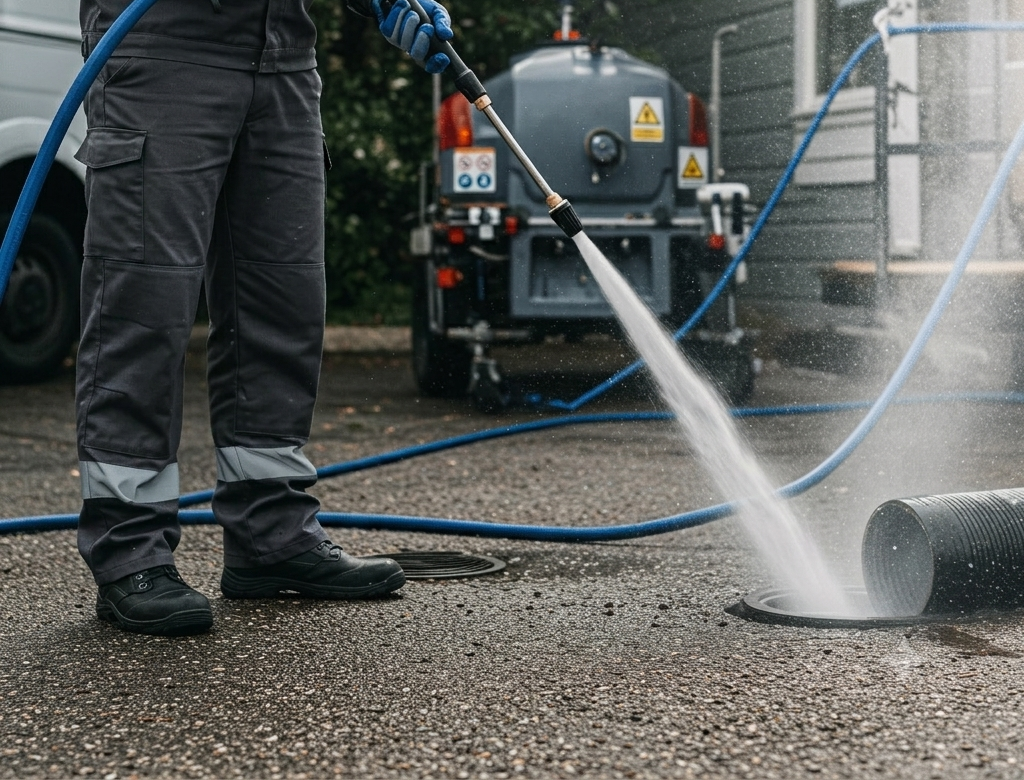
Is Your Catch Basin About to Flood Your Lot? Signs It Needs Cleaning in Louisville, KY
QUICK ANSWER: A catch basin needs cleaning when water drains slowly after rain, pools around the grate, shows visible debris or sediment, or gives off a stale odor. The sump below the outlet pipe traps sediment until it fills, and once it is more than about 60 percent full it stops catching new material and starts passing it downstream. Most commercial basins need service once or twice a year, and sites with heavy leaf fall, traffic, or fleet activity may need more. Clean before the fall leaves and again before spring storms so the basin has room when the water arrives.
The first hard rain of the season hits the back lot, and the water does not go where it should. It slides across the asphalt, collects around the grate near the loading dock, and sits there in a brown ring of leaves and silt. Twenty minutes after the rain stops, the puddle is still the same size. Nobody has looked inside that basin since last year, and it shows.
Catch basins are the least visible part of a commercial drainage system, which is exactly why they fail without warning. They sit flat in the pavement, they do their job quietly for months, and they only get attention when a lot floods. By then the basin has been filling for a long time.
This guide covers how a catch basin and sump work, the warning signs that a basin is filling, why fall is a risky time in Louisville and Southern Indiana, and how to set a cleaning schedule that keeps stormwater moving before the next heavy rain.
How a Catch Basin and Sump Work
A catch basin is a box or chamber set into the ground beneath a grate or curb opening. Surface runoff enters through the grate, drops into the chamber, and leaves through an outlet pipe that connects to the larger drainage system. The basin's job is to catch trash, leaves, and heavy sediment before they enter the pipes downstream.
The sump is the part of the chamber below the outlet pipe. Water slows down inside the basin, and heavier material settles to the bottom by gravity. Because the outlet sits above the floor of the chamber, partly clarified water leaves while the settled solids stay behind.
A sump and a catch basin are related but not identical. A catch basin collects surface runoff and traps debris before water enters the drainage system, while a sump holds and manages collected water. Both depend on empty space to work, and both need regular cleaning.
The sump only works while it has room. As sediment builds, the storage space shrinks, the water has less time to settle, and more of what enters the basin continues on through the outlet.
Warning Signs a Basin Is Filling
Most basins give clear hints before they fail. Walk the site after a rain and look for these.
Slow Drainage
Water takes longer to leave paved areas because the chamber or outlet is partially blocked.
Standing Water Around The Grate
Persistent pooling after rainfall indicates the basin cannot drain water efficiently through its outlet.
Visible Debris
Leaves, litter, mulch, and silt around the grate often indicate additional debris inside the basin.
Sediment Near The Outlet
Sediment piled near the outlet pipe reduces the sump's available capacity and restricts water flow.
Odor
Stale or sour smells around the basin indicate organic material decomposing in trapped standing water.
Damage At The Grate Or Frame
Cracks, settling, and gaps around the frame allow soil inside, accelerating sediment buildup within the basin.
Any one of these is a reason to schedule service. Two or more means the basin is already working below capacity.
The 60 Percent Rule and Why Full Basins Backfire
A common maintenance guideline is to clean a basin before the sump is about 60 percent full. Past that point, its ability to capture new sediment drops off sharply, because there is too little still water left for solids to settle.
A full basin is worse than an empty one in a second way. Fast, turbulent stormwater can stir up material that settled in earlier storms and push it downstream in one pulse. Months of accumulated sediment, and whatever was attached to it, can leave the basin at once. A basin that should be a trap becomes a source.
For commercial lots this matters because of what the sediment carries. Solids that settle on parking lots, fleet yards, and loading areas often carry traces of metals from brake wear, oil and grease from vehicles, and nutrients bound to soil. Keeping the sump empty keeps those materials in the basin until a crew removes them.
The practical takeaway is simple. Do not wait for water to back up. By the time you see flooding, the basin crossed the useful line some time ago.
Why Fall Is the Risky Season in Louisville and Southern Indiana
Leaf drop turns a manageable maintenance problem into an urgent one. Louisville's sewer district has described how leaves and debris block the openings of catch basins and push water into streets, and it manages a system of nearly 75,000 catch basins across Jefferson County. Its crews put a lot of work into clearing them ahead of storms, and it asks residents not to rake leaves into basins, ditches, or drainage channels because the material only moves downstream and causes problems for someone else.
Public crews handle the curbside system. The basins on a commercial lot, behind a shop, or inside a fenced yard are a separate job, and they get the same leaves. Trees along a property line, a windblown parking lot, and a busy delivery area all load a basin quickly in October and November.
Then comes winter and spring, when heavy rain on cold, saturated ground sends more runoff into the same basins. A basin that went into leaf season half full has very little room for that water.
That is why the useful windows for service are late fall, after most leaves are down, and late winter, before spring storms. A site that cleans in those windows starts each wet season with an empty chamber.
TIP: Walk your site after the first heavy rain of the season and mark every spot where water stays on the pavement. Those marks show which basins are slow and give you a ready list of where to start cleaning.
What a Proper Sump and Catch Basin Cleaning Covers
A good cleaning is more than a quick pass with a hose. It works through the whole basin and the openings that feed it.
Pumping The Contents
Vacuum equipment removes standing water and settled waste, emptying the sump completely.
Removing Sediment
Compacted material is removed from the sump bottom, restoring its full depth and capacity.
Extracting Debris And Trash
Leaves, litter, and other debris are removed from the chamber and grate, restoring water flow.
Clearing Inlets And Outlets
Blockages are cleared from inlets and outlets, allowing water to enter and exit freely.
Inspection And Assessment
The crew inspects walls, frames, and pipes, identifying cracks, damage, and developing problems.
Disposal
Pumped waste and removed debris are hauled away and disposed of through proper channels.
WARNING: Do not rake or sweep leaves, mulch, or yard waste into a catch basin or drainage channel to get them off your lot. The material moves downstream and clogs other parts of the system, and it can come back to your basin with the next rain.
Setting a Cleaning Schedule
Many commercial basins need service once or twice a year. Sites near heavy debris, constant traffic, or heavy vegetation often need more. A schedule built around your site beats a calendar guess.
Start with a baseline inspection. Look at every basin on the property and note how full each one is. The numbers tell you which basins fill fast and which ones can go longer. Basins under trees, near loading docks, or downslope from large paved areas usually fill first.
Then set the interval by the fastest basin. If a basin was half full after six months, it needs service about twice a year. If it was nearly empty, once a year may do. Adjust after each visit based on what was removed.
Keep records. A short log with the date, the basin, and the condition at each visit tells you how your schedule is working. It also gives you something to show if anyone asks about the upkeep of your drainage system.
For properties with several basins, a recurring service schedule keeps the work from slipping. Crews return on a set cycle, clear the basins, and report what they find, so drainage stops being a surprise.
Frequently Asked Questions
How often should catch basins be cleaned?
Many commercial basins need service once or twice a year. Sites near heavy debris, constant traffic, or lots of trees often need more. Inspect every basin at least once a year and set the schedule from what you find.
What causes catch basins to clog?
Leaves, sediment, trash, and runoff debris build up inside the chamber and block flow. High traffic areas and nearby vegetation speed the process, which is why regular cleaning keeps these drainage points working.
Can a clogged basin really cause flooding?
Yes. When a basin fills with debris, water cannot drain and backs up across the surface. In heavy rain, that quickly turns into pooling and flooding around buildings, parking areas, and loading zones.
What is the difference between a sump and a catch basin?
A catch basin collects surface runoff and traps debris before the water enters the drainage system. A sump holds and manages collected water. Both need cleaning to work, and a full service covers each one.
How do I know my basin needs cleaning?
Look for slow drainage, standing water, visible debris, or odors near the basin. Sediment piled up to the outlet pipe is another clear sign. When you see any of these, schedule service before the next significant rain.
Do crews clean basins outside Crestwood?
Yes. Crews based in Crestwood, Kentucky, regularly service sumps and catch basins across Louisville and into Southern Indiana, including Jeffersonville, New Albany, and Clarksville.
Keep Your Catch Basins Ready for Every Storm
A catch basin only protects your lot while it has room to work, and that room disappears a little with every rain. The warning signs stay small for a while. Water that drains slowly, a puddle that lingers near the grate, debris packed against the opening, and a stale odor are all quiet signals that the sump is filling. Reading them early turns a flooding emergency into a routine cleaning that costs far less and causes no disruption to your operation.
The reliable approach is a schedule built around your own site. Clean the basins before the leaves fall and again before spring storms, keep a short record of what each visit finds, and let the fastest filling basin set your interval. With 10
years of work on sumps and catch basins, A & K Solutions LLC
keeps drainage systems clear across Crestwood, KY and the surrounding region, so the next heavy rain meets empty chambers instead of a backed up lot.